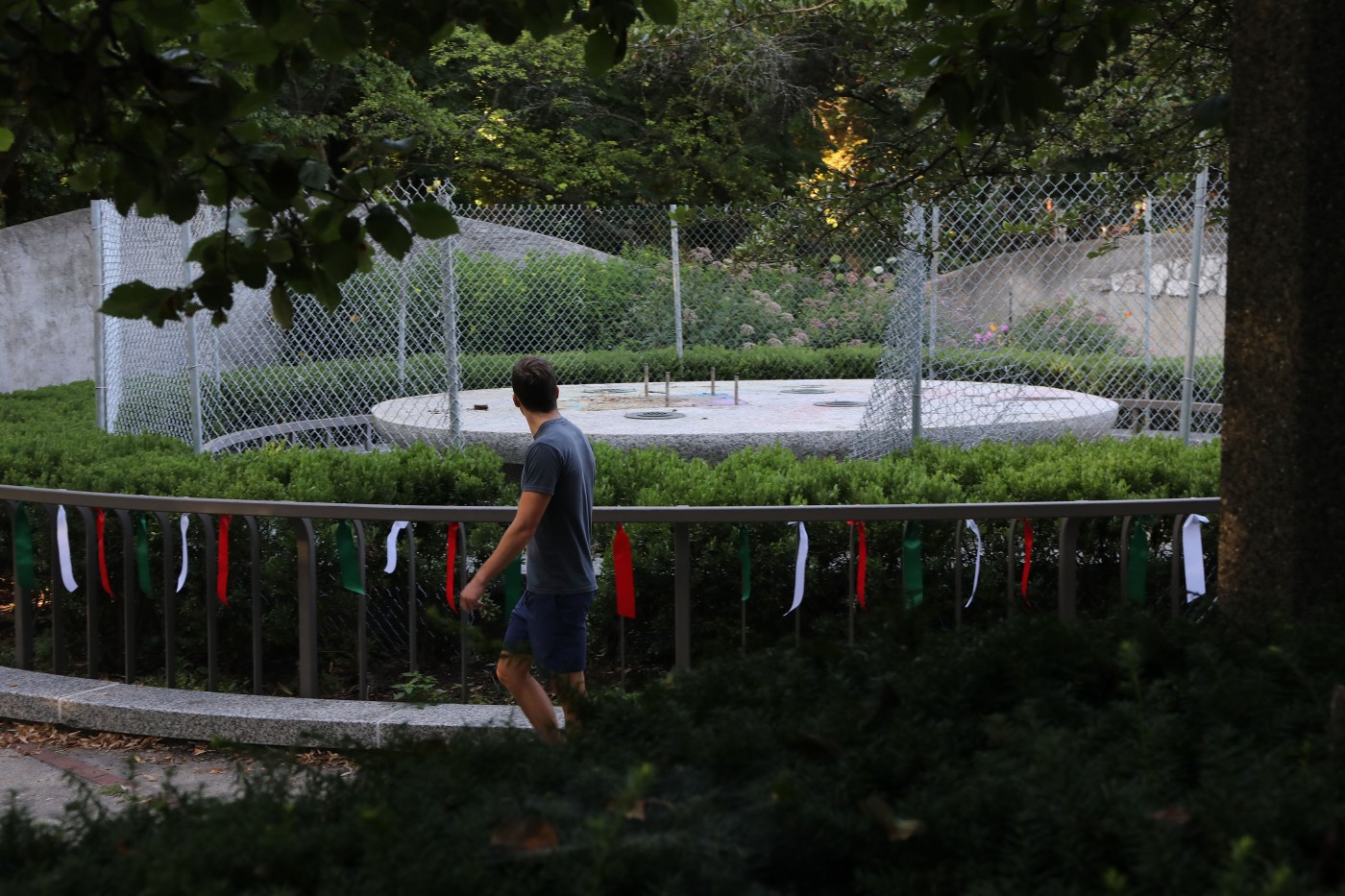
Chicago officials have announced the installation of a statue dedicated to Saint Frances Xavier Cabrini at Arrigo Park in Little Italy. This decision comes as a replacement for a statue of Christopher Columbus that was removed during the racial justice protests in 2020. The announcement was made by the Chicago Park District and the city’s Department of Cultural Affairs and Special Events on Wednesday.
The selection of Mother Cabrini was met with considerable public support. During the process to determine the replacement statue, she emerged as a favored choice among voters, reflecting her significant contributions to the community. Mayor Brandon Johnson emphasized Cabrini’s legacy, noting her establishment of schools, orphanages, and hospitals that served Italian immigrants over a century ago. “Mother Cabrini really embodies what I call the soul of Chicago,” Johnson stated at a news conference.
Legacy of Mother Cabrini
Cabrini, canonized in 1946, founded the Missionary Sisters of the Sacred Heart of Jesus and was instrumental in setting up 67 institutions, including orphanages and hospitals, before her death in Chicago in 1917. The city plans to initiate a search for artist proposals for the new statue within the next two weeks.
The removal of the Columbus statue was part of a broader movement addressing historical figures whose legacies have come under scrutiny. Following the removal, Johnson declared last May that the statues would not be reinstated, in an effort to reflect “our collective humanity.” The city also plans to loan the Cabrini statue to a prospective Italian immigrant museum while dismantling the base of the larger Columbus statue at Grant Park. This decision is part of a settlement that concluded a lawsuit filed by the Joint Civic Committee of Italian Americans regarding the removal of the Arrigo Park statue.
Community Reactions and Future Considerations
In response to these developments, Ron Onesti, president of the JCCIA, expressed a sense of compromise, stating that the agreement allows his organization a role in deciding how cultural heritage is honored. “Sure we want it back where it was,” Onesti remarked, adding, “But the world has changed quite a bit.”
Conversely, the Italian American Human Relations Foundation of Chicago criticized the agreement, labeling it as “cultural treason.” The foundation’s president, Lou Rago, argued that the arrangement amounts to a “burial” of the Columbus statue, which he believes deserves a prominent place in public view. Rago contended that the statue’s placement in a museum exhibit represents a diminished recognition of Columbus’s historical significance.
City officials also considered several other historical figures for memorialization, including Renato Dulbecco, Enrico Fermi, and Maria Montessori. The decision to install the Cabrini statue marks a step toward addressing the complexities of Chicago’s cultural narratives while honoring the contributions of diverse communities within the city.