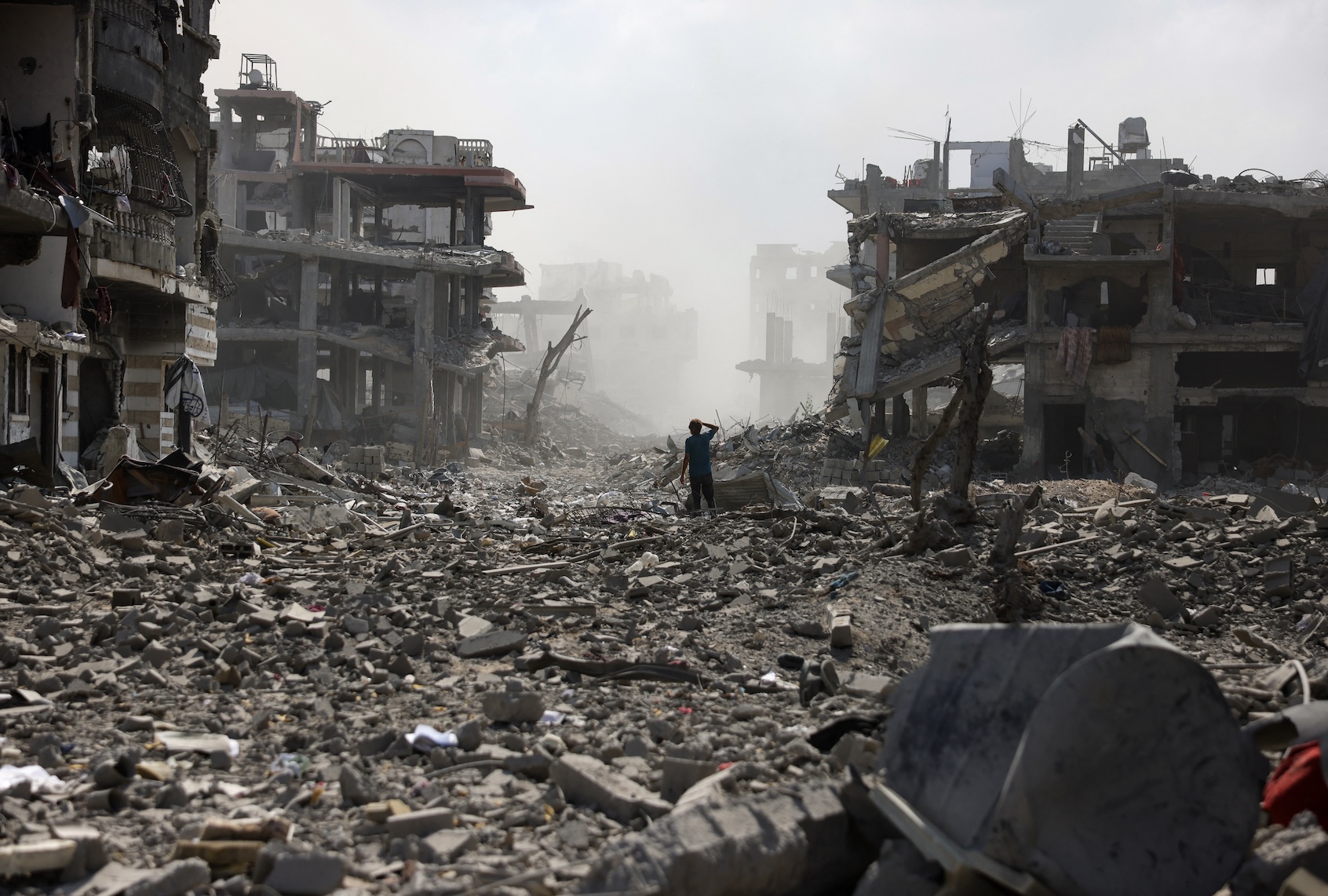
A recent Israeli airstrike in Gaza on the third day of Ramadan resulted in the deaths of at least two Palestinians, marking yet another violation of the ceasefire agreement established in October 2025. Since that agreement, over 600 Palestinians have reportedly lost their lives, not counting those who have died due to starvation or disease linked to Israel’s ongoing partial blockade. Although the Israel-Palestine conflict has received less media attention in the United States in recent months, it remains a contentious political issue that influences American voting patterns and perceptions of culture and politics.
According to internal analysis by the Democratic Party, the ongoing humanitarian crisis has significantly altered the political landscape regarding the U.S. relationship with Israel, a historical ally. The extensive civilian casualties in Gaza have prompted a reevaluation of American support for Israeli military actions, shifting the dialogue around morality and accountability in foreign policy.
In an interview with Salon, Bruce Robbins, a professor of English and humanities at Columbia University, discussed the evolving understanding of atrocity and its moral implications. Robbins, who has explored the concept of atrocity in his works, including his 2025 book “Atrocity: A Literary History,” reflects on the historical and contemporary recognition of mass violence.
He articulated a personal connection to the subject, noting his father’s role as a bomber pilot in World War II. Robbins wrestles with the moral complexities of wartime actions, questioning societal perceptions of atrocities committed by one’s own nation compared to those perpetrated by others. He stated, “Do you only see something as an atrocity if other people do it? Or do you also see it as an atrocity when your side does it?”
Robbins draws parallels to the bombings of Hiroshima and Nagasaki, events that evoked mixed reactions among Americans. While some viewed these bombings as necessary wartime efforts, others, like physicist Albert Einstein, recognized them as atrocities that should never be repeated. Robbins argues that the media’s role in shaping public perception has evolved, particularly with the rise of social media, which allows unfiltered images and narratives to reach audiences swiftly.
In light of the ongoing conflict, Robbins posits that the U.S. is now more than a passive observer. He pointed out that many Americans are beginning to see their country’s military and diplomatic support for Israel as complicit in the violence against Palestinians. This realization has led to a burgeoning moral outrage among younger generations, many of whom are increasingly vocal about their opposition to Israel’s actions in Gaza.
Robbins emphasizes a shift in how atrocity is perceived in the current climate, suggesting that the U.S. is directly implicated in the humanitarian crisis. He notes the protests at institutions like Columbia University, where students have confronted board members associated with companies that supply military hardware to Israel. Robbins explains, “The students were objecting in part to people from the Lockheed Martin board of trustees who are also in the university’s board.”
As the conflict continues, Robbins highlights a growing awareness among various sectors of U.S. society. A notable number of Jewish Americans are vocalizing their discontent with Israeli policies, joining protests and advocating for a reevaluation of U.S. support. This sentiment is echoed among younger activists and communities with ties to regions affected by U.S. foreign policy, who are challenging long-held narratives about national duty and morality.
The implications of these shifts are significant. Robbins suggests that the historical framing of Israel as a moral ally is evolving into a perception of the nation as a pariah, especially among younger voters. The growing support for movements such as BDS (Boycott, Divestment, Sanctions) reflects this change, as activists push for external pressure to catalyze internal reforms within Israel.
Robbins concludes by asserting that the current moment may represent a new phase in the understanding of atrocities, where opposition to Israel’s actions is framed not merely as a moral stance but as a necessary critique of a state that has lost its moral legitimacy. This evolution in perspective signals a profound shift in the discourse surrounding U.S. foreign policy and the ethical considerations that accompany it.
As the situation in Gaza continues to unfold, the implications for American politics and society are becoming increasingly complex. The dialogue surrounding morality, accountability, and national responsibility is likely to shape the political landscape for years to come.