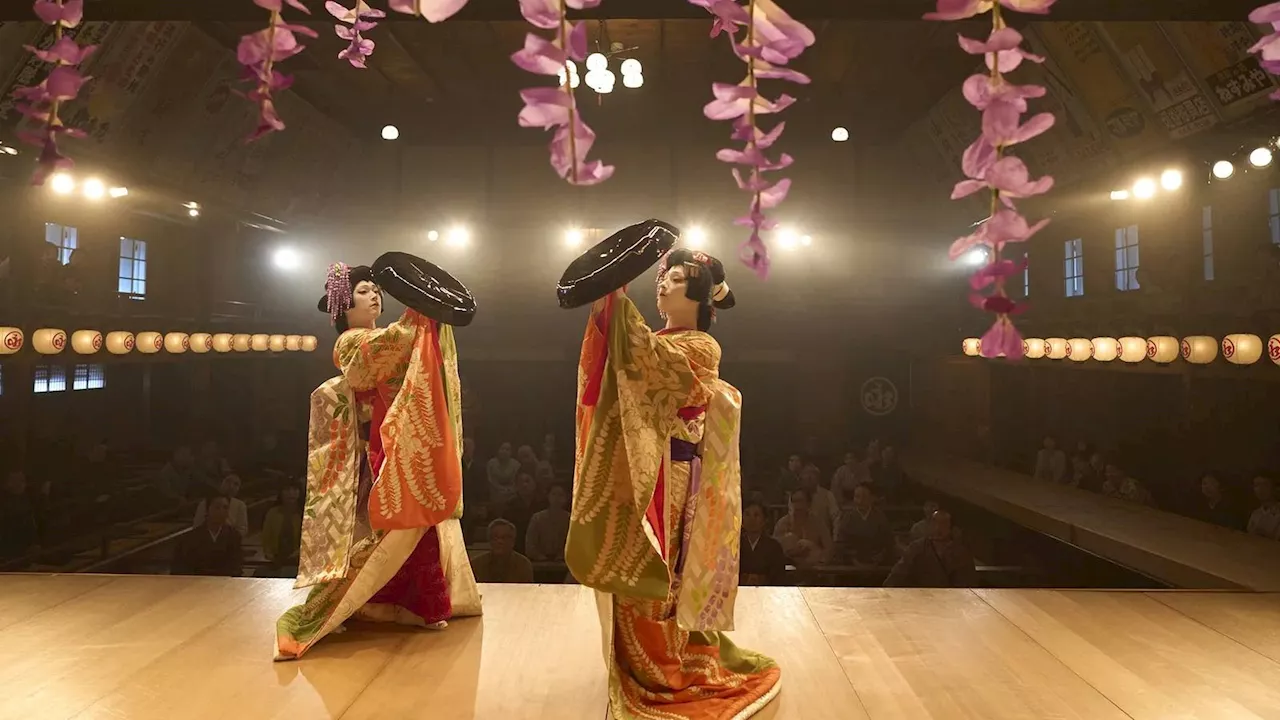
The film Kokuho has made waves in the international film scene, achieving a remarkable 93% rating on Rotten Tomatoes and becoming Japan’s highest-grossing live-action movie. While the Academy Awards have increasingly embraced global cinema, Kokuho stands out not only for its box office success but also for its recent nomination in the Best Makeup and Hairstyling category.
Although Kokuho was Japan’s submission for the Best International Feature race, it did not secure a position among the final five nominated films. Nonetheless, its recognition for makeup artistry, led by talented professionals like Kyoko Toyokawa, Naomi Hibino, and Tadashi Nishimatsu, underscores the film’s exceptional contribution to the cinematic arts.
Exploring the Themes of ‘Kokuho’
Set against the backdrop of kabuki theater, Kokuho is adapted from the novel by Shuichi Yoshida. The film chronicles the lives of two best friends, Kikuo Tachibana and Shunsuke Ōgaki, whose dedication to kabuki theater shapes their destinies over several decades. As a historical epic, it delves into the intricacies of traditional Japanese culture, while also tackling contemporary issues such as social stratification and the enduring influence of the yakuza.
The film’s narrative is compelling, featuring a psychological drama that unfolds like a Shakespearean rivalry. Kikuo, raised as the son of a powerful yakuza leader, faces a life-altering incident when his family is murdered by a rival group. Following this tragedy, he is adopted by Hanai Hanjiro II, an esteemed actor and the father of Shunsuke. This twist sets the stage for a gripping exploration of ambition, love, and the quest for acceptance.
A Technical Marvel
The makeup artistry in Kokuho plays a pivotal role in its storytelling. The film not only replicates renowned kabuki performances but also ages its characters convincingly over time. As the plot progresses, Kikuo suffers a debilitating injury that complicates his performances, while Shunsuke grapples with diabetes, inherited from his father. The film’s reliance on practical makeup techniques, rather than digital effects, enhances the authenticity of the characters’ transformations.
Despite challenges faced by live-action films in gaining international traction, Kokuho has carved out a niche, surpassing the previous record set by Bayside Shakedown 2 to become Japan’s top live-action hit. While animated films often find broader appeal, Kokuho serves as an accessible entry point for audiences unfamiliar with Japan’s historical context, particularly the role of the yakuza in post-World War II society.
The film’s success at the box office and its Academy recognition come at a time when international cinema is increasingly acknowledged. As Kokuho continues to attract viewers, its nomination is expected to further elevate its profile, aided by the distribution efforts of GKids, which aims to reach a wider audience.
In conclusion, Kokuho is more than just a cinematic achievement; it is a profound exploration of the human experience, resonating with themes of ambition and adversity. The film’s Oscar nomination not only highlights its artistic merit but also emphasizes the importance of diverse narratives in contemporary cinema. As it continues to screen in theaters across the United States, it invites audiences to engage with its rich storytelling and cultural significance.