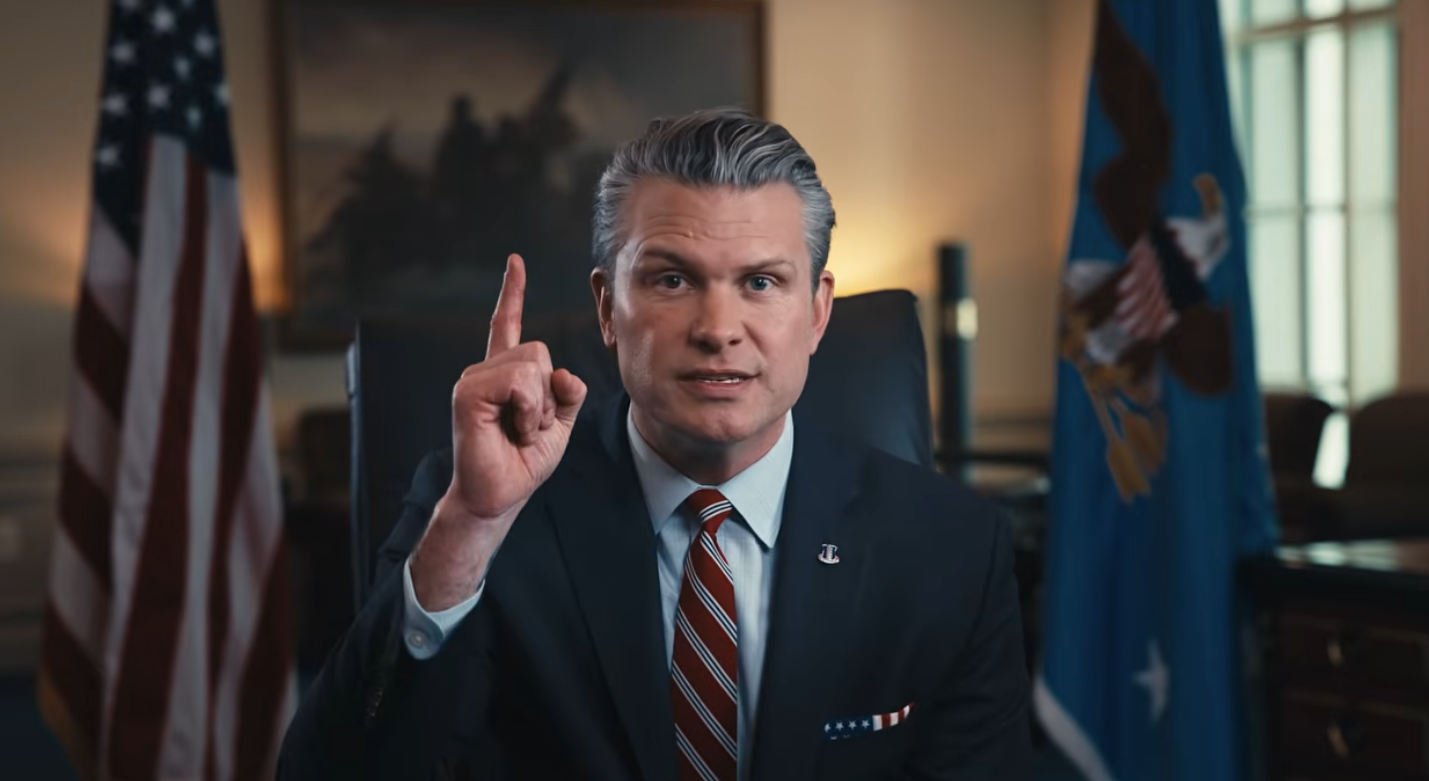
UPDATE: In a bold move signaling a major shift in military education, Defense Secretary Pete Hegseth has announced the formation of a task force to review the United States’ war colleges. This urgent initiative, revealed Thursday night in a video on social platform X, marks a significant escalation in Hegseth’s ongoing campaign to reshape military education, now targeting the Pentagon’s own institutions.
The task force will have 90 days to deliver a report identifying deficiencies and ensuring that war colleges focus squarely on “core national security issues.” This announcement follows Hegseth’s recent decision to ban military attendance at over a dozen elite civilian universities, including severing ties with Harvard University, regarded by Hegseth as a “red-hot center of hate-America activism.”
The urgency of Hegseth’s review is underscored by the crucial role war colleges play in shaping high-ranking military leaders. Institutions like the Army War College, Naval War College, and Air War College provide advanced education for senior officers, Pentagon civilians, and international partners, focusing on joint operations and national security strategy.
“We want military leaders who are critical thinkers that studied the principles on which our founding fathers established this republic,” Hegseth stated. “The task force will ensure meritocracy and high standards are at the forefront of the war college system.”
Hegseth’s announcement is part of a broader restructuring of the Pentagon’s relationship with higher education, which began quietly but has intensified through early 2026. On February 6, he announced the termination of all graduate-level military education programs with Harvard, effective for the 2026-27 academic year. This move was followed by an announcement on February 27 to cancel military attendance at prestigious institutions like Princeton, Columbia, and MIT.
Hegseth, a graduate of both Princeton and Harvard, accused these universities of being “breeding grounds of toxic indoctrination” and suggested they failed to contribute to the development of effective military leaders. An internal Pentagon memo identified 33 universities at risk for military education programs, advising service members to prepare alternative plans.
As elite universities are being pushed out, the Pentagon has begun to signal acceptable alternatives, highlighting institutions like Liberty University and Hillsdale College. Additionally, flagship public universities such as the University of Michigan and University of North Carolina are being positioned as preferred options.
An analysis of 2024 Pentagon Tuition Assistance data reveals that approximately 350 service members utilized these benefits at the targeted universities, while over 50,000 attended the American Public University System, a for-profit online education provider.
Criticism of Hegseth’s strategy has emerged not only from liberal circles but also within the defense community. Advocates argue that civilian universities offer critical access to cutting-edge research essential for military capabilities. Concerns have been raised about the uncertainty this policy creates regarding access to top law, medical, and nuclear engineering programs.
With the task force now in motion, a report on the effectiveness of war colleges is expected by mid-June. Observers are eager to see whether the review leads to structural changes or simply reaffirms the status quo of these military institutions. Meanwhile, the Harvard Kennedy School is adjusting its admissions process for affected service members, offering deferrals and connections to partner institutions.
For students, especially those in ROTC programs or considering military service, the evolving landscape of graduate education represents a significant shift. The implications of these changes will unfold over the coming years, raising critical questions about the future of military leadership and education.