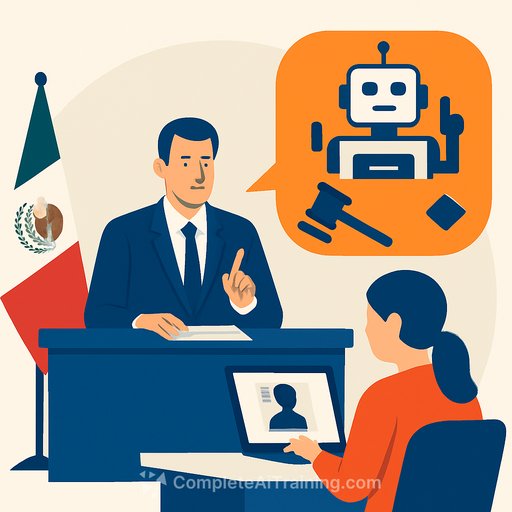
Mexico’s Senate Proposes Sweeping AI Limits to Protect Workers
Mexico’s Senate is moving fast on a bill that would impose strict rules on how employers use artificial intelligence in workplace decisions. The proposed reform demands full disclosure if employers deploy AI in hiring, performance reviews, or employee monitoring, and crucially requires human oversight on any AI-driven decision affecting workers. Companies would have just 360 days to comply once the law passes.
This immediate regulatory push targets a critical gap amid the rapid AI adoption sweeping manufacturing, services, and administrative sectors in Mexico. Senator Pablo Angulo, who introduced the proposal, warned that unchecked AI could “advance without counterweights, directly affecting workers.” The reform aims to prevent automated job decisions and intrusive surveillance from undermining labor rights.
New Rules to Govern AI Use in Hiring and Surveillance
The reform will amend the Federal Labor Law with six clear mandates for companies using AI tools, including:
- Mandatory disclosure before implementing AI in workplace decisions
- Transparent explanations of AI algorithms and criteria
- Prohibiting fully automated employment decisions—human validation required
- Ban on intrusive AI-based employee surveillance
- Ensuring that AI technology costs do not fall on workers
The Ministry of Labor will have 180 days to set official guidelines on applying these changes, then firms get another 180 days to adjust internal workflows. This tight timeline signals a sense of urgency around protecting Mexican workers from unchecked AI risks.
AI Risks Meet Growing Skills and Governance Gaps
Research by the Organization for Economic Co-operation and Development (OECD) shows nearly 27% of jobs in member countries face automation risks. In Mexico, the threat is most acute for workers in services, manufacturing, and office functions. Yet many companies treat AI as an afterthought rather than embedding it throughout operations, creating uneven benefits and risks.
Despite 70% of Mexican workers acknowledging AI’s productivity boost, adoption lags due to insufficient formal training programs. Outsourcing expertise and weak leadership structures have amplified over-reliance on algorithms, sparking concerns that “organizations begin to rely on AI as a substitute for judgment,” warned Sofía Bentinck, CEO of Anchor Relocation Worldwide.
Cybersecurity and Accountability Urged in AI Deployment
The bill’s timing aligns with escalating digital security concerns. A Cybersecurity Ventures report reveals a global shortage of Chief Information Security Officers (CISOs), leaving millions of companies vulnerable to AI-related cyber risks. The report forecasts global cybercrime costs soaring to $12.2 trillion annually by 2031.
Many small to medium enterprises in Mexico, like elsewhere, lack dedicated cybersecurity leadership, increasing threats from AI exploitation. Some are adopting hybrid models combining human oversight and AI tools, including virtual CISOs, to bridge governance gaps—a shift underscored by the Senate’s push for mandatory human involvement in AI workplace decisions.
HR Faces New AI Challenges and Compliance Demands
If enacted, the legislation will radically reshape how Mexican companies manage AI in recruitment, performance reviews, and workforce analytics. HR executives must now navigate strict transparency obligations, limits on AI-driven employee surveillance, and a clear mandate that no employment decisions be fully automated.
This approach seeks balance, not AI bans. Instead, it defines clear boundaries ensuring AI enhances productivity while safeguarding human dignity and labor rights. The legislation adds Mexico to a growing list of countries wrestling with AI governance in workplaces amid rising fears of automation replacing human judgment.
As AI tools proliferate across industries worldwide, Mexico’s Senate is sending a clear message: technology must serve workers, not replace or surveil them without oversight.
What’s Next: Watch for Regulatory Guidelines and Industry Response
The Ministry of Labor faces pressure to issue detailed implementation standards within 180 days. The next year will be critical as Mexican companies revamp their AI policies to meet new transparency and oversight rules.
For American businesses with cross-border operations or supply chains involving Mexico, these developments signal a tightening global regulatory landscape on workplace AI—one that will influence corporate responsibility and human resource management beyond Mexico’s borders.
Senator Pablo Angulo: “The absence of clear rules could allow AI innovation to advance unchecked, directly impacting workers’ rights.”
Stay tuned as this urgent reform moves through the legislative process and potentially sets a new global benchmark for responsible AI use in labor markets.