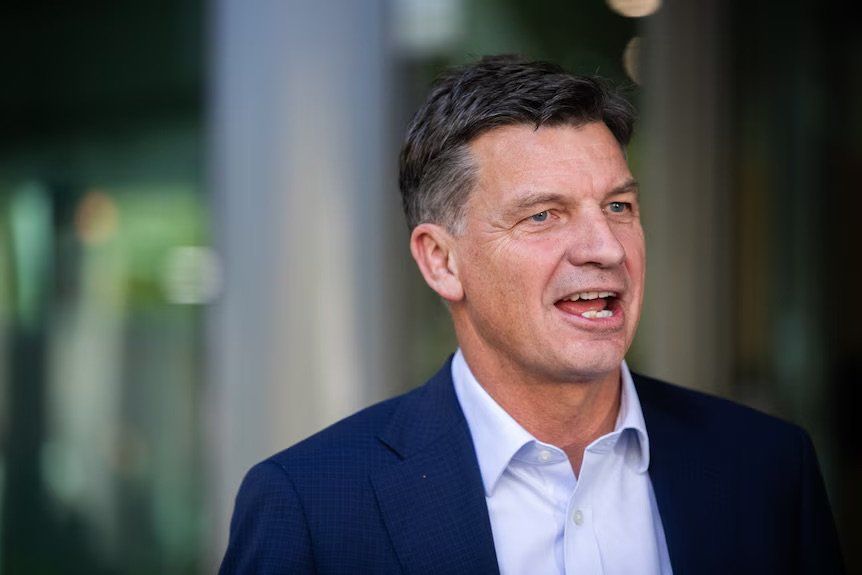
Opposition Leader Angus Taylor has ignited fresh controversy by calling Welcome to Country ceremonies “overused” just days after Aboriginal Elders were booed during Anzac Day commemorations across Melbourne, Sydney, and Perth. Speaking on ABC Insiders, Taylor condemned the disrespectful interruptions but also suggested the ceremonies have lost their meaning due to frequent use.
“I feel that at times — often, actually. I think it is overused and as a result they are devalued,” Taylor said, urging that the ceremonies should happen less frequently to preserve their significance. His remarks echo those of former Liberal leader Peter Dutton, who during last year’s election campaign claimed Welcome to Country events were dividing the nation, similar to the divisive debate over the Voice referendum.
The backlash over Taylor’s comments comes amid widespread condemnation of booing directed at Aboriginal Elders during sacred Anzac Day moments. In Melbourne, Bunurong Elder Mark Brown was jeered during his Welcome to Country address at the Shrine of Remembrance. In Sydney, the Acknowledgment of Country spoken by Ray Minniecon was interrupted by hecklers, while Whadjuk Noongar Elder and veteran Di Ryder was also booed during her speech in Perth.
Following the disruptions, RSL WA CEO Stephen Barton slammed the behavior as “one of the most disgraceful things I have ever heard,” thanking Aunty Di for her tribute to veterans. The attacks on these ceremonies sharply contrast the respect traditionally shown during Anzac Day services, which honor those who served in the military, including Indigenous Australians whose contributions are often overlooked.
Investigations revealed that anti-immigration group Fight for Australia used social media to mobilize supporters to disrupt these Welcome to Country ceremonies. The Age reported that some booers in Melbourne were linked to the recently disbanded far-right National Socialist Network, stirring alarm among politicians and community leaders.
Victorian Premier Jacinta Allan condemned those responsible for the Melbourne disturbances, calling the conduct “disgraceful” and “bastardry,” emphasizing that politicizing Anzac Day dishonors all who fought for freedom. “To break the stillness of Dawn Service is not just ugly behavior towards our Aboriginal servicemen and women who defended this country — it disrespects everyone who fought for our freedoms,” Allan said.
“The morons who tried to snatch the sacred moment away…deserve more than contempt and a few words of rancour,” wrote Indigenous academic Marcia Langton in The Guardian Australia, highlighting the deep offense caused by the disruptions.
Langton pointed out that over 118 Aboriginal and Torres Strait Islander men served in the Australian Light Horse during World War I, underscoring the importance of these ceremonies in honoring Indigenous veterans. Her calls for those involved in the heckling to be banned from future events reflect growing frustration at the rising tensions around Indigenous recognition in Australia.
Meanwhile, Taylor, who refused to criticize far-right politician Pauline Hanson for her immigration comments, left the decision of including Welcome to Country ceremonies to local organizers but reiterated his stance on reducing their frequency to protect their meaning.
This controversy strikes at the heart of ongoing debates about Indigenous recognition, national unity, and respect for cultural traditions in Australia, with significant symbolic weight during Anzac Day, a day Americans also recognize for honoring military valor and sacrifice.
With tensions mounting and political figures fueling divisions, the fate of Welcome to Country ceremonies is now under scrutiny. The coming weeks will likely see heated discussions on how to balance respect for Indigenous culture with calls for national cohesion.
As America watches this unfolding cultural clash down under, parallels emerge with ongoing debates about honoring Indigenous peoples and veterans—a sensitive balancing act shared across nations.