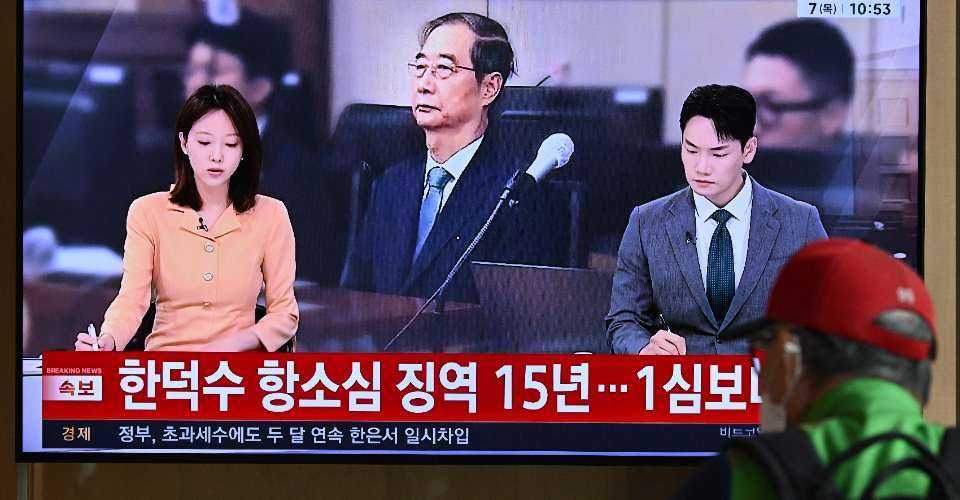
South Korean Court Reduces Former PM Han Duck-soo’s Prison Sentence to 15 Years
A South Korean appeals court has cut the jail sentence of former Prime Minister Han Duck-soo from 23 to 15 years over his involvement in the brief martial law declaration ordered by ex-President Yoon Suk Yeol. The ruling came on May 7 in Seoul, delivering a significant update in a high-profile political legal saga gripping the nation.
Han was originally sentenced in January to nearly a quarter-century behind bars after being convicted of aiding Yoon’s controversial martial law decree from December 2024. That order suspended civilian rule for about six hours before the National Assembly swiftly voted to overturn it. The period of unrest plunged South Korea into political chaos, prompting severe judicial consequences for those involved.
Appeals Court Reassesses Role, Reduces Sentence
The appeals court acknowledged the substantial crimes in Han’s conduct but significantly lowered his term. The presiding judge cited Han’s “more than 50 years as a public official” and lack of evidence proving active involvement in planning or systematically leading the insurrectionary actions.
“We sentence the defendant to 15 years in prison,” the judge said, emphasizing Han’s failure to oppose the martial law despite past experiences witnessing unconstitutional suspensions of civilian government in South Korea’s authoritarian past.
The court criticized Han for abandoning “grave responsibilities” tied to his authority, noting he sided with those enforcing the martial law. Still, after lawmakers lifted martial law, Han convened a cabinet meeting on Yoon’s behalf to rescind it, showing a reluctant compliance with parliamentary authority.
Han’s Career and Emotional Impact
At 76 years old, Han has been in custody since his initial sentence. Known as a seasoned technocrat, he held key government roles including finance minister and earned multiple awards for public service. Despite his prestigious career, the ruling marks a stark downfall due to involvement in one of South Korea’s most turbulent political crises in decades.
Observers noted Han’s calm and unreadable reaction to the verdict, wearing a white shirt and dark suit as he listened without visible emotion.
Wider Political Fallout Continues
This decision is the latest in a cascade of legal actions against former officials linked to ex-President Yoon. Last week, Yoon’s own jail sentence for obstructing justice was increased from five to seven years. Yoon remains imprisoned for life on charges of leading an insurrection.
Adding to the political turmoil, Yoon’s wife, former First Lady Kim Keon Hee, saw her corruption sentence jump from 20 months to four years. Her penalties involve bribery and stock manipulation unrelated to the martial law case but indicate a broad crackdown on Yoon’s circle.
Why This Matters Now
The reduction in Han’s sentence signals a nuanced judicial approach toward figures involved in South Korea’s short but severe martial law episode, balancing accountability with recognition of long public service. For American and international observers, the case underscores ongoing challenges in South Korea’s democracy concerning authoritarian legacies and political stability.
With key figures like Han and Yoon facing sustained legal scrutiny, the nation watches closely as further appeals and trials unfold, shaping South Korea’s political future.
Leaders and analysts worldwide are monitoring these developments amid rising concerns about political unrest impacting East Asia’s vital economic and security landscape.