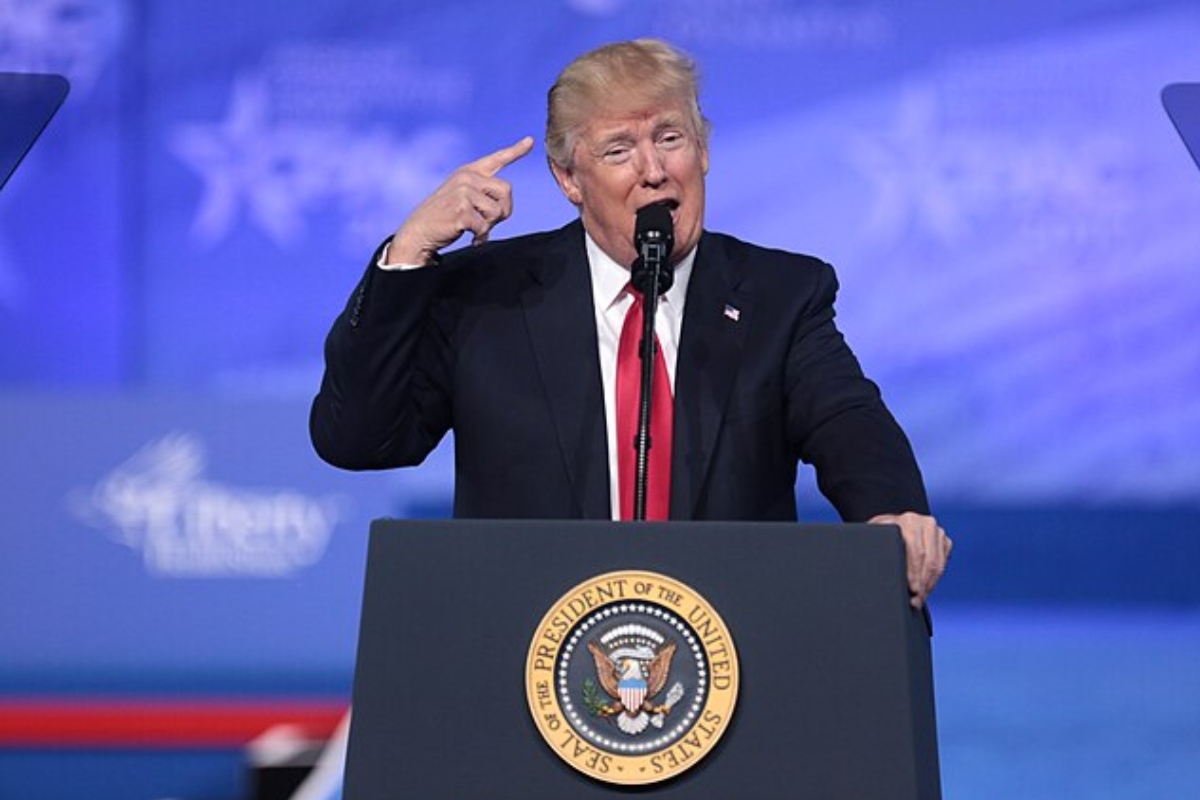
The ongoing conflict between the United States, Israel, and Iran reached a critical juncture as President Donald Trump declared on March 15, 2024, that the war will only conclude with Iran’s “unconditional surrender.” This statement emerged as military actions intensified, marking the second week of hostilities characterized by airstrikes and missile exchanges across the Middle East.
In a message shared on his Truth Social platform, Trump asserted, “There will be no deal with Iran except UNCONDITIONAL SURRENDER!” He emphasized a vision for a new leadership in Iran, stating, “After that, and the selection of a GREAT & ACCEPTABLE Leader(s), we, and many of our wonderful and very brave allies and partners, will work tirelessly to bring Iran back from the brink of destruction, making it economically bigger, better, and stronger than ever before.”
The escalation followed a significant military operation that resulted in the death of Iran’s Supreme Leader Ayatollah Ali Khamenei, alongside casualties among civilians, including hundreds of children in Tehran. The exiled son of Iran’s last Shah, Reza Pahlavi, has expressed interest in leading Iran and has engaged with Trump administration officials. Despite this, Trump suggested that leadership should ideally come from within Iran rather than external figures.
In response, Iranian Parliament Speaker Mohammad Bagher Ghalibaf criticized Trump’s comments, stating, “Trump still doesn’t realize what calamity he has brought upon himself and the American soldiers by martyring our Imam.” He emphasized that the future of Iran will be determined by its people, not dictated by external forces.
Iran’s government has signaled its readiness for a ground invasion or other military tactics in response to U.S. actions. President Mahmoud Pezeshkian claimed that the search for a new leader for Iran has already commenced, highlighting the country’s ongoing political dynamics.
The conflict has prompted a broader military campaign, with U.S. and Israeli forces targeting Iranian military infrastructure and assets. According to U.S. officials, dozens of Iranian naval vessels and critical defense sites have been destroyed since the fighting began. In retaliation, Iran has launched missile and drone attacks against Israeli territory and U.S. interests in the region, affecting bases and infrastructure in Gulf nations.
Notably, Iranian strikes have disrupted oil facilities and shipping lanes, heightening concerns over global supply disruptions. A drone attack on Saudi Arabia’s Ras Tanura refinery, one of the world’s largest oil processing hubs, forced the facility to temporarily halt operations, rerouting exports to alternative routes.
The conflict has also extended beyond Iran’s borders, with Israeli forces targeting Iranian-backed militias in Lebanon. In turn, Iran’s proxies have intensified their attacks against Israeli targets.
The humanitarian impact of this conflict is increasingly dire, with the United Nations refugee agency reporting that over 330,000 people have been displaced due to the violence. As military operations continue, the situation remains fluid, with potential implications for regional stability and international relations.