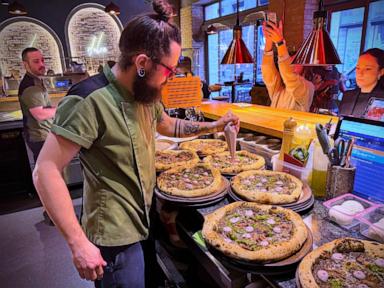
In a unique culinary venture, Neverland Pizzeria in central Budapest is inviting diners to experience a taste of ancient Rome with a limited-edition pizza that incorporates only ingredients available over two millennia ago. Founder Josep Zara and his team have crafted a pie that pays homage to the culinary traditions of the Roman Empire, long before the introduction of tomatoes and mozzarella.
Zara’s inspiration stemmed from a recent archaeological discovery in Pompeii, where excavations revealed a fresco depicting a focaccia-like flatbread topped with pomegranate seeds, dates, spices, and a pesto-like spread. This discovery ignited Zara’s curiosity about what ancient Romans might have eaten and led to the idea of creating a pizza reflective of that time.
While strict definitions of pizza as we know it today did not exist in ancient Rome, Romans did consume flatbreads topped with various ingredients, often sold in snack bars known as thermopolia. Zara stated, “Curiosity drove us to ask what pizza might have been like long ago.”
The challenge was to rely solely on ingredients that were present in Roman times. Zara consulted historical texts, including the ancient cookbook De re coquinaria, believed to have been authored around the 5th century. The team meticulously compiled a list of historically documented ingredients to present to head chef László Bárdossy.
Creating a Pizza from the Past
The limitations of the project demanded extensive experimentation. Bárdossy noted, “We had to discard a couple of ideas. The fact that there wasn’t infrastructure like a water system at the time of the Romans made things difficult for us, since more than 80% of pizza dough is water.” To overcome this hurdle, the team devised a method to help the dough rise using fermented spinach juice.
The base of the pizza is formed from ancient grains such as einkorn and spelt, which were widely cultivated during Roman times. The resulting dough differs from modern pizza, exhibiting a slightly denser texture.
The final creation is topped with ingredients that reflect Roman aristocratic cuisine, including epityrum (an olive paste), garum (a fermented fish sauce), confit duck leg, toasted pine nuts, ricotta, and a grape reduction. Bárdossy explained that while the pizza is a modern iteration, it is designed to be comprehensible for contemporary tastes.
“Our creation can be called a modern pizza from the perspective that we tried to make it comprehensible for everyone,” he said. “Although we wouldn’t use all its ingredients for everyday dishes.” This pizza is not intended for daily consumption, but rather as a special culinary experience for those intrigued by historical flavors.
A Blend of Tradition and Innovation
For Zara, this project aligns with Neverland Pizzeria’s philosophy of balancing tradition with innovation. “We’ve always liked coming up with new and interesting things, but tradition is also very important for us,” he remarked. Despite their adventurous spirit, Zara assured that certain modern boundaries remain in place: “Of course, we definitely do not use pineapple.”
This experimental pizza not only offers a glimpse into the past but also highlights the creative potential of modern culinary practices. As diners flock to experience this unique offering, Neverland Pizzeria stands out in Budapest’s vibrant food scene, showcasing how historical insights can inspire contemporary cuisine.