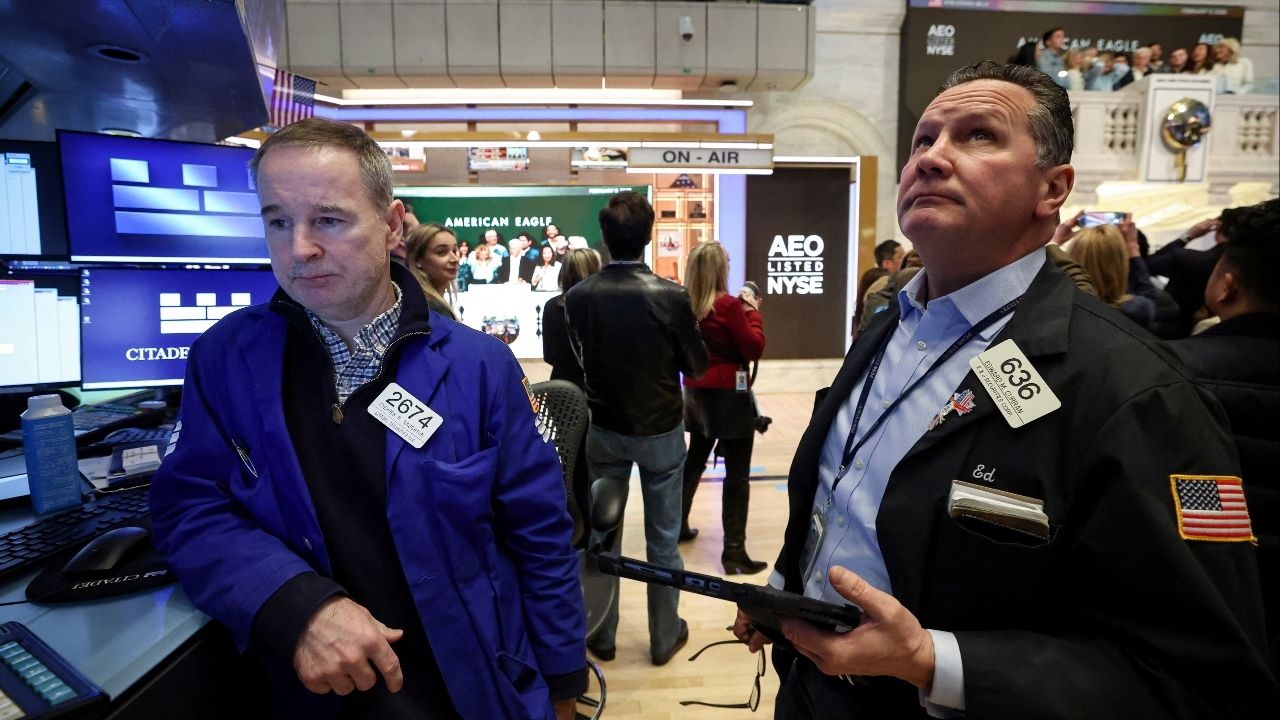
The S&P 500 and Nasdaq Composite indices experienced declines on Thursday, as a recent surge in technology stocks came to an abrupt halt. The downturn followed disappointing investor reactions to results from Nvidia, which, despite posting strong quarterly earnings, saw its shares drop by 3.6%. This decline has reignited concerns over the broader implications of the artificial intelligence (AI) market.
Nvidia reported better-than-expected results for the January quarter and projected current-quarter revenue that exceeded market estimates. Yet, investor confidence remained shaky. “Investors have been wary of the AI trade and its implications as we look out over the next couple of years,” said Jeff Schulze, head of economic and market strategy at ClearBridge Investments. “Even though Nvidia did deliver strong numbers, it wasn’t enough to convince investors to push the stock higher.”
Sector Performance: Technology and Software
The Philadelphia SE Semiconductor Index fell 3% after reaching a record high in the previous session. Major tech stocks, including Alphabet, also saw declines, with shares down 2.2%. In contrast, the S&P 500 software and services index gained 2%, buoyed by a 3% increase in Salesforce shares, despite the company guiding fiscal 2027 revenue below Wall Street expectations.
Various sectors, including software, financial brokerage, and legal services, faced significant losses earlier this year due to growing fears surrounding AI disruptions. On Wednesday, the S&P 500 and Nasdaq had closed at two-week highs, driven by a rally in heavyweight technology stocks.
As of 10:11 a.m. ET, the Dow Jones Industrial Average rose 121.68 points or 0.25% to 49,603.83. In contrast, the S&P 500 fell 25.72 points or 0.37% to 6,920.41, while the Nasdaq Composite dropped 201.10 points or 0.87% to 22,950.98. The information technology and communication services indices were the most significant decliners among the 11 major S&P sectors, while financials improved by 1.4%, providing some offset to the losses, with major banks like JPMorgan Chase, Bank of America, and Wells Fargo all rising nearly 1%.
Market Sentiment and Global Factors
Investor sentiment fluctuated significantly in February, with U.S. equities experiencing sharp swings between gains and losses. This volatility has been driven by questions regarding the efficacy of substantial planned AI spending. In addition to domestic market activities, investors were keenly observing the latest round of U.S.-Iran talks in Geneva, which aimed to resolve longstanding nuclear disputes and prevent further U.S. military action against Iran.
Crude oil prices fell by approximately 1%, contributing to an overall drop in the energy stocks index, which was down 0.1%. Other notable movements in the market included a 6% decline in shares of Trade Desk, following a revenue forecast that disappointed investors. Contrarily, J.M. Smucker saw its shares surge by 6.6% after surpassing third-quarter profit and sales estimates and announcing the appointment of two new directors following a constructive engagement with investor Elliott Investment Management.
Software provider C3.ai faced a significant setback, with shares plummeting 16.7% after forecasting sales below estimates and announcing a substantial workforce reduction of 26%. In brighter news, Celsius Holdings saw a 14.3% increase in share prices after reporting fourth-quarter revenue above expectations.
Overall, advancing issues outnumbered decliners by a 1.17-to-1 ratio on the NYSE and by 1.03-to-1 on the Nasdaq. The S&P 500 recorded 26 new 52-week highs and just 1 new low, while the Nasdaq Composite noted 54 new highs and 55 new lows.
The market’s movements reflect a complex interplay between sector performance, investor sentiment, and global geopolitical factors, illustrating the challenges and opportunities within the current economic landscape.