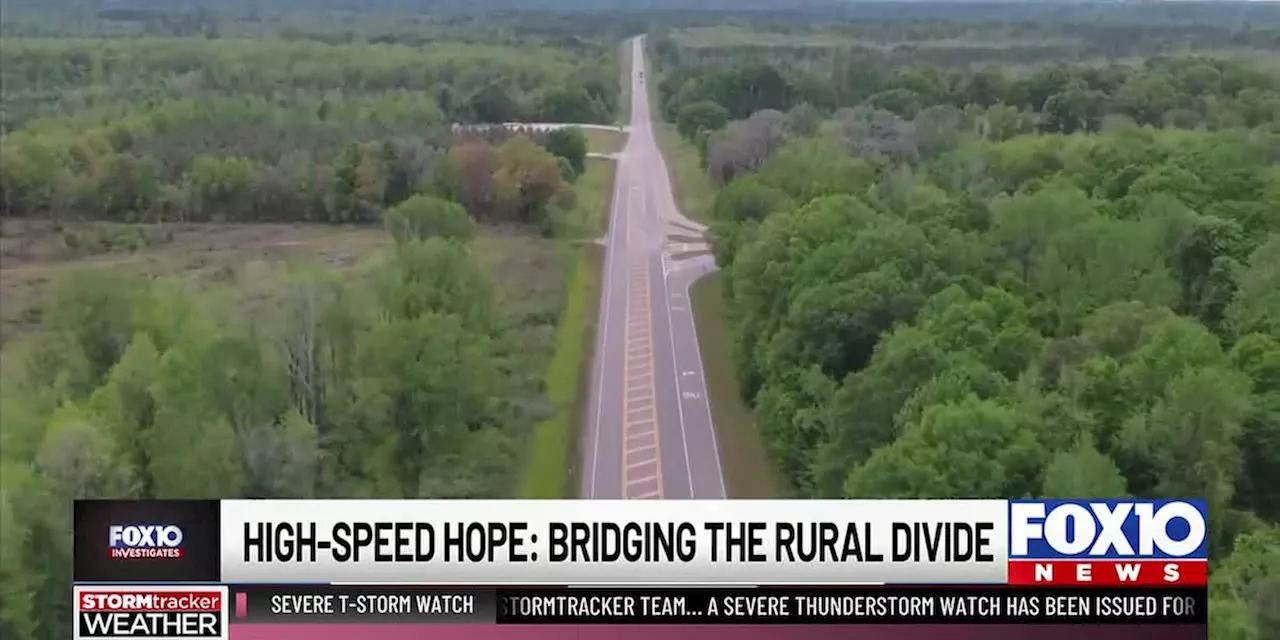
Rural Alabama Towns Face Urgent Broadband Crisis as High-Speed Internet Lags Behind
Millry and Chatom, small towns in Washington County, Alabama, are battling a critical digital divide as residents continue to struggle with unreliable and slow internet access. Despite recent efforts to expand broadband, fiber optic service remains patchy, leaving communities isolated in an increasingly connected world.
Locals in Millry, a town with just over 500 residents, have seen only limited improvements after fiber optic cables were extended just months ago. Lonnie Guy, a lifelong Millry resident and co-owner of Nana and Papa’s Ice Cream and Sandwich Shop near Highway 17, recalled the slow crawl from dial-up days to today’s sparse fiber access — a change he says was immediate but still incomplete.
“Just a few months ago, fiber optic cable was finally laid to my home about 11 miles west of Millry,” said Guy. “The difference was immediate — faster load times, better speeds and more reliable internet for home and business.”
However, Chester Caulder, general manager of the local ISP Millry Communications, explained why widespread fiber rollout is a slow, costly process in these rural pockets.
“We average about 4.7 households per mile of fiber constructed,” Caulder said. “Fewer customers spread out over more land means higher expenses and slower expansions.”
Chatom Residents Face Daily Digital Disruptions
Just a few miles south, in Chatom, the broadband battle feels even more urgent. The town has more residents and businesses but continues to face limited internet options hampered by cost and infrastructure delays.
Landis Waite, a lifelong Chatom resident, summed up the frustration many locals feel.
“Internet’s always been pretty much bad,” Waite said. “It’ll take a few hours sometimes for a webpage to pull up or anything like that.”
Crew efforts to lay fiber optic cables began years ago, but progress remains painfully slow. Social media posts this March highlighted frequent outages, with people reporting even ATM machines going offline.
“When my internet’s down, I ain’t getting no notifications from nobody. No texts, no calls. I gotta go out to the yard,” said Waite, illustrating how essential reliable internet has become just to stay connected.
Why High-Speed Internet Matters More Than Ever
For these rural communities, the lack of dependable broadband isn’t just an inconvenience—it impacts business operations, education, healthcare access, and social connections. Elderly residents like Waite often resort to walking to neighbors’ homes for basic phone calls.
“If you get it stationed at your house, you should have good service — at least enough for a phone call,” Waite said. “I gotta walk down to my grandma’s house just to get a hold of her cause I can’t call her off Wi-Fi.”
Authorities and local providers stress that infrastructure expansion will continue, but the combination of sparse population density and high costs creates significant barriers. Despite the challenges, residents remain hopeful that ongoing projects will soon bring the high-speed internet they need to thrive.
Next Steps: Expanding Fiber and Bridging the Digital Divide
Millry Communications is actively working to push fiber further into the area, promising full-speed connections once lines reach homes.
Chester Caulder emphasized, “If I can get fiber to you, I can deliver the full complement of internet speed that you are purchasing.” Yet, rural realities mean many remain offline for now.
As America’s economy becomes increasingly digital, the fate of small towns like Millry and Chatom highlights the pressing need to invest in rural broadband. For these communities, every day without reliable internet is one more day behind in the modern world.
Residents, business owners, and local providers alike watch and wait — hoping that this new wave of fiber will finally deliver the high-speed hope their towns desperately need.