US Limits Nuclear Intelligence Sharing with South Korea Over Leak Claims
The United States has tightened intelligence sharing with South Korea following a South Korean lawmaker’s public identification of a sensitive North Korean uranium enrichment site, raising alarm across the alliance and triggering urgent talks to resolve the fallout.
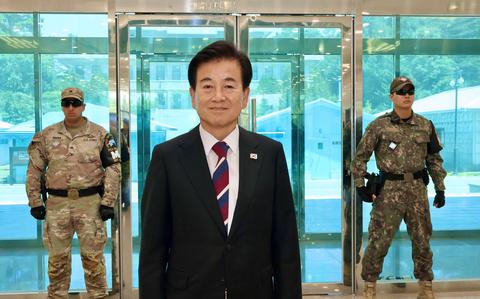
Officials confirmed this week that South Korea’s Defense Intelligence Agency condemned the disclosure of details about the North Korean nuclear facility in the Kusong region, calling it a classified “joint secret” between the US and South Korea. The controversy began after Unification Minister Chung Dongyoung named the site during a National Assembly committee meeting on March 6, sparking immediate concerns from US military intelligence circles and allied defense leaders.
The issue is now straining the decades-long US-South Korea alliance, with the US reportedly cutting back on intel access related to North Korea’s nuclear programs, according to Yonhap News. While South Korean officials have insisted the restrictions have not weakened their immediate military intelligence capabilities, the move signals a serious fracture in intelligence cooperation at a time of heightened tensions on the Korean Peninsula.
Alliance Coordination Continues Despite Information Gap
Multiple South Korean military sources told Yonhap News that real-time collaboration between US and South Korean forces remained intact during North Korea’s recent missile launches in March and April. Nevertheless, the decision to limit strategic intelligence access marks a significant shift, reflecting US concerns about operational security and trust.
Meanwhile, Minister Chung denied revealing any classified information, insisting his remarks relied solely on open-source information. At a recent briefing, he challenged the narrative framing his disclosure as a “leak.”
The South Korean Ministry of National Defense maintained a careful stance, refusing to confirm or deny the intelligence sharing restrictions. Spokeswoman Chung Binna emphasized that close, frequent communication continues on critical issues, confirming that military readiness information remains fully functional. She warned against public discussion of sensitive intelligence details, calling it “entirely detrimental” to national security and the US-South Korea alliance.
Diplomatic Efforts Underway to Repair Alliance Strains
National Security Adviser Wi Sung-lac acknowledged in Hanoi that Seoul is actively communicating with Washington to resolve the dispute. Although he declined to confirm the scope of US intelligence restrictions due to their sensitive nature, Wi assured that efforts are ongoing to restore full cooperation.
The controversy escalated further when Rep. Sung Il-jong, chair of South Korea’s National Defense Committee, alleged that US Army Gen. Xavier Brunson, commander of US Forces Korea, personally protested to South Korea’s Defense Minister Ahn Gyu-back over the information leak. The Defense Ministry rejected this claim as “not true at all.”
President Lee Jae Myung publicly defended Minister Chung on April 20, pointing out that information about the Kusong uranium site was already publicly known and thus should not be deemed a security breach.
Why This Matters Now
This development comes at a critical moment as North Korea continues advancing its nuclear weapons program, challenging US and South Korean strategic interests. Restricting intelligence sharing between these key allies could undermine coordinated responses to Pyongyang’s provocations and spotlight trust issues within the longstanding military partnership.
The US decision to tighten access reflects deep sensitivity over operational secrecy and highlights the fragile balance between transparency and security in allied relations facing aggressive adversaries.
Next Steps
Both Washington and Seoul are racing to repair the alliance’s fractured trust with high-level communications underway to clarify rules for intelligence disclosure and prevent further leaks. Observers expect ongoing discreet diplomacy aimed at restoring full intelligence cooperation while safeguarding classified information amid escalating North Korean threats.
For now, the US-South Korea security alliance remains operational but under strain, emphasizing the critical role of trust and discretion in one of the world’s most vital military partnerships.