Usdan Marketplace Restores Reusable Dishes and Metal Utensils After Boiler Crisis
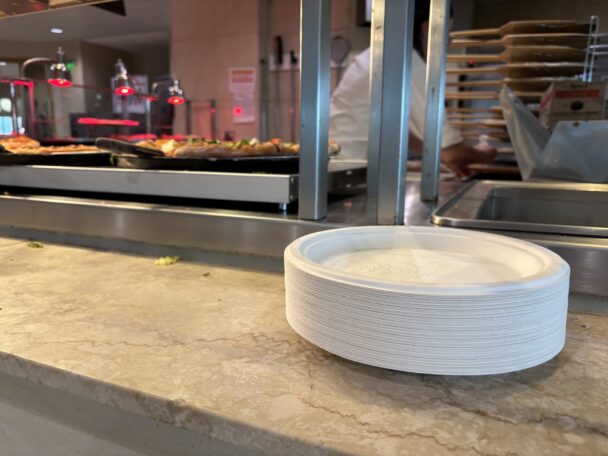
Usdan Marketplace has ended its weeks-long switch to single-use tableware, restoring reusable plastic dishes and metal utensils after a steam boiler failure disrupted dishwasher operations. Students and employees noticed the change back to disposable plates and plastic utensils around April 5, with reusable items returning by April 19-20.
This urgent shift stemmed from “a catastrophic failure” of one of the electric steam boilers that heats water for dishwashing, explained Mike Conte, Director of Physical Plant Operations. Without steam, dishwashers cannot reach sterilization temperatures, forcing the Marketplace to rely on disposable items temporarily.
“Without the steam, dishwashers cannot heat water to the temperature required to meet standards for sterilization,” Conte told The Argus.
Parts replacement for the boiler took time to arrive and three additional days for installation, prolonging the disruption. Meanwhile, some kitchenware not directly used by students, such as serving trays and pots, was still being washed and hand-disinfected by staff, said student employee Miles Danielski ’27. He noted, “They needed a lot less help in the dish room when we had paper plates because you just kind of toss everything.”
Disposable plates and utensils went on a conveyor belt or into trash bins, but were composted according to student worker Stacey Remy ’27. Despite this, students expressed frustration about lack of communication from the University regarding the sudden change.
Henry Wendorf ’27 commented, “It seemed super wasteful, and I didn’t really understand why we were using them.” The unexplained switch fueled rumors and concern over Usdan’s environmental impact — especially after the shutdown of the University’s reusable takeout program, Eco To-Go, last May.
Sustainability Concerns Rise Amid Trash Weight Increase
Jennifer Kleindienst, Sustainability Director, emphasized the University’s efforts to revive a to-go reusable container program with Bon Appétit and administrative offices to reduce food waste. She also pointed out troubling waste management trends this year.
“Weights have been consistently higher for trash this year, 4–10 tons more monthly,” Kleindienst wrote. “This likely indicates improper container disposal despite composting efforts.”
This latest boiler failure and reliance on disposables reignite discussion about campus sustainability challenges and best practices moving forward.
Students Relieved as Normal Service Resumes
Ryan Villano ’27, a frequent Usdan visitor, praised the repairs. “It was a 10 out of 10 move to fix the [boiler],” he said. “Everything is back up and running, so I am very happy.”
The restoration of reusable dishes marks a return to pre-crisis dining operations, easing waste concerns and improving the student dining experience as campus grapples with balancing convenience and sustainability.
As Usdan recovers from this unexpected disruption, all eyes are on University leadership’s next moves to strengthen infrastructure and guide sustainability efforts in 2026.
For continued updates, contact Spencer Landers at [email protected] or Anabel Goode at [email protected].